Showing posts with label Atal Bihari Vajpayee. Show all posts

Sunday, August 19, 2018

Atal Bihari Vajpayee: A realist who said "wo wapas aa rahe haen"

With almost six decades of public life, former Prime Minister and the first from the Rashtriya Swayam Sewak Sangh (RSS) to enter Parliament Atal Bihari Vajpayee arguably had been an open book for many to peep in and tell tales for the posterity.

A day before the 2004 Lok Sabha election verdict, Atal Bihari Vajpayee had been surrounded by his party colleagues at the 7, Race Course Road residence of the Prime Minister. The leaders brought out their on-ground assessments of the just concluded voting. The BJP leaders concurred, and so told Vajpayee, exuding confidence of a victorious battalion returning to the base after a successful assault on the enemy front, that a resounding win is just a matter of a few hours.

Listening them all with innocence of a child, Vajpayee was untouched with flow of pride all around. At last, he said, "Wo (Congress) wapas aa rahe haen (The Congress is coming back to power)."

The beaming faces took refuge in somber expressions. His dismissal with trademark sleight of hand had none to contest. Then came the command -- Bhojan kijiye (take meals).

But Vajpayee wasn't a God. He was another mortal. And, so, he too rued till he lost his senses of having erred. "Pramod galat tha (Pramod Mahajan was wrong for persuading in advancing the Lok Sabha elections)," Vajpayee would so afterwards to his audiences.  

Vajpayee was just another mortal for the fact that he too fell for the "India Shining" campaign, which any incumbent government would like to believe in having given ears to Babus all five years. He was also just another mortal for the reason that he too rued wrong decisions. All make wrong decisions. And, all rue for rest of life as well. Time is spent, thus, in thinking and sharing about "ifs".      

VAJPAYEE was no Gandhian. He was not even a communalist. He was neither a socialist. He was essentially a realist. And, indeed, Vajpayee was a humanist.

Vajpayee was arguably the most pampered protégé  of the Rashtriya Swayam Sewak Sangh (RSS). He had been hand-picked for political works. With pride, he was hosted in thousands of homes of the RSS functionaries for meals. That he could reason with the leading lights of the Congress, and debated with uncommon élan had an electrifying impact among millions of saffron foot soldiers. They had more reasons to believe in ideologies which had not been accepted in the mainstream of the country.       

But Vajpayee was unshackled. Ideology didn't bind him. He was rather evolved. That he never succumbed to rhetoric exemplified his realism.

The Kandahar episode defines Vajpayee. The brief history is thus: An Indian Airlines flight IC 814 (Airbus A300) carrying 176 passengers was hijacked on December 24, 1999 while being en route from Kathmandu to New Delhi by Harkat-ul-Mujahideen. Eventually, it landed in Kandahar. Terrorists sought release of hardened and jailed terrorists in exchange to release the terrorists.

The Winter biting cold was sweating out the strategists. The family members of the passengers had laid siege of the Lutyens' Delhi. Vajpayee's comrade and the then Union Minister Jaswant Singh's landline phone at his residence buzzed all day and night -- some abusing, some pleading.

Prime Minister Narendra Modi's Sherpa and National Security Advisor (NSA) Ajit Doval, who had then been the RAW (Research and Analysis Wing) chief, was aghast at diplomatic failure to allow the ill-fated plane a free fly over the skies of a number of countries.

Years of training of Vajpayee's alma mater -- the RSS -- would have wanted that no hardened terrorists be released, that the government should have taken a leaf out of Israel and ordered commando operation.

Yet, Vajpayee seemingly wilted. He sent emissaries to hold talks with terrorists. And, in the end, he accepted all demands of the Pakistan backed terrorists. He didn't want to be an iron man of India. He just wanted his men and women safe and back in the country. For him, no price was big enough to secure the human lives. And, thus, Vajpayee, baring his soft core, revealed his undying trust in the virtue of humanism, and realism.

IT'S often said that to err is human, and repeating same mistake again and again is a hallmark of the highest order of stupidity. But Vajpayee didn't free himself from succumbing to string of judgmental errors, so as to say, to keep trying for a breakthrough in India's relations with Pakistan. 

In contrast, Dr Manmohan Singh displayed a consistent policy of maintaining a long distance with Pakistan, and never fell for any of the trappings, which occasionally blow in with western winds. Dr Singh was unaffected by a posse of intelligentsia in New Delhi, who hop from one event to another to showcase their pipedream for peace with Pakistan.

But Vajpayee fell for such trappings. He hopped on to a bus for trip to Lahore with Shatrughan Sinha as a companion. He hosted General Pervez Musharraff. He allowed safe passage to Pakistani Army regulars trapped on Kargil hills despite hundreds of Indian Jawans laying down their lives to wrest the honour back.

That Vajpayee defied all warnings to connect with Pakistan was ostensibly for the reason that he was a humanist at the core. He, indeed, believed that neighbours must be friends.    

VAJAPAYEE could defy protestations from within the saffron camp against privatisation of public sector units -- not just loss making, but even those who made profits. That he could lord over the one and only instance of the government showing spine to put in practice the maxim that "government has no business to be in business" was also for the reason that he had been a realist.

Paying homage to Veer Savarkar once, Vajpayee had given a loud statement of his being a realist. "Kavita aur bhranti to sath sath chal sakti hai, par kavita aur kranti ka sath chalna bahut mushkil hai (Poetry and confusion can go along, but not poetry and revolution)," Vajpayee had said, while describing the multi-faceted personality of Savarkar. He said so at a stage where he had been introduced as a poet.

The revolution that Vajpayee talked about was change in the society which could lead to transformation of the country.

AND, such changes, are most often brought about by a leadership sworn in to realism who painstakingly takes steps with aims to lay bridges for transformation. And, Vajpayee, indeed, took giant steps for India's qualitative transformation.    

Sunday, February 28, 2016

Lost to chatters of Gymkhana club

What if oil prices had not crashed by about 80 per cent from its peak? 

In a few hours, India will know finer details of the third General Budget of the Narendra Modi government. Indian economy is huffing and puffing to stay just a little above seven per cent mark. 

A year of collective shock to Modi's economic incrementalism called creative by some has passed by. Admirers of Modi exude sense of resignations. His foes betray exultation. People at large give a sense of disbelief, and seek refuge in collective silence.

A government sitting on a bounty of over Rs 1.50 lakh crore of oil windfall has mostly been on expenditure freeze. The fiscal deficit is well within target. But all other targets set in the Budget for 2015-16 coming close to the timeline suggest authorship of some drunken economic lunatic. Direct tax collection is off target by 10 per cent, and suddenly woken up tax men are doing some crazy things to make nightmarish reality little less acerbic.

Indian economy had a joy ride for a bout a decade from 1999-2008. The Gross Domestic Product (GDP) flew past magical eight percentage points. But the journey 2009 onward has been down the hill.

The decade long golden run of Indian economy was arguably not fueled by great software export or manufacturing expansion. It was a golden gift of the weather God. The Monsoon had been steady. The government incentive to produce foodgrains enabled farmers to sweat to sweet income. The farmers had money in their pockets to go out and buy. Additionally, the government splurged on rural income, pouring at least Rs five lakh crore by way of National Rural Employment Guarantee Scheme (NREGS) and its various earlier avatars and Pradhan Mantri Gram sadak Yojna (PMGSY) in that golden decade. 

Afterward, the government got wiser, knowing that its rural splurge was past the line to give political dividend anymore. And, the powerful stream suddenly turned into trickle. 

The weather God too got angrier. The Monsoon rains turned wobbly. The spread was not even. The year 2008 brought a pause to the golden agrarian run. Many parts of the country came under the spell of drought. And since then the drought areas had only been geographically shifting, while some like the Bundelkhand, Marathwada, Vidarbha, parts of Karnatka and Gujarat staying under long spell of dry weather. 

The parched land dried rural splurge stream battered the Indian economy by 2013. The GDP growth kissed five per cent. The Modi government's first year saw a major sub-normal Monsoon. A year later, his government watched clueless to the blow of the unseasonal rains and hailstorm. Another year later, the Monsoon left large parts of the country parched. 

And Modi never believed in rural splurge. But the economy crawled back to seven plus mark, but the Manmohan Singh's time of jobless growth stayed with Modi too. 

With jobs not in sight and rural income gone, the facade of India's robust economy has been exposed to all. 

The governments without exception have been fascinated with those flashing degrees from Harward University and its likes. Such tribe penetrates the government echelon with ease. Those who had never seen a village in their lives manned the Ministry of Rural Development not long ago. Those who are enamoured with American economic flamboyance had been eyes and ears of P Chidambaram. With the change of the government, the tribe has not gone away, but only changed their robes.

Arun Jaitely had apparently lobbied hard to get into Ministry of Finance when Atal Bihar Vajpayee was Prime Minister. All lawyers turned politicians dream of becoming Finance Minister. But Vajpayee had a good measure of caliber of all around him. And, Jaitely was not allowed anywhere near North Block. 

India's irony is such a man is now Finance Minister who to his credit has not a single idea original to him which could inspire an awe. Millions of people in the country are now awe-struck to the poverty of ideas of the North Block.               

If oil had not crashed by about 80 per cent from its peak, India would have seen Modi government as UPA-III in much worse form. Difference is arguably just of an accidental gain from outside.

Indian economy is sadly slave to chatters of the Gymkhana club. And, only idlers go to a club.

Wednesday, July 08, 2015

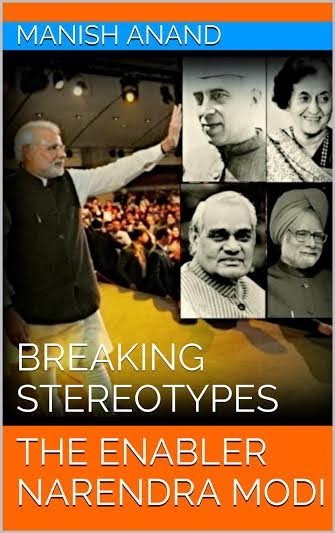
Book review: The enabler Narendra Modi

It has been a year since Narendra Modi came to power after leading the Bharatiya Janata Party to a landslide victory in the 2014 parliamentary election.
Modi in a few months after his inauguration shut down the Planning Commission, which by default subverted the idea of India being a federal democracy. All chief ministers as a matter of routine would line up each year to get their annual plan approved by the Planning Commission. Modi has in place inaugurated NITI Aayog wherein the chief ministers head sub-groups on various subjects. But most importantly Modi assured from the ramparts of the Red Fort, that he would ‘neither take bribe nor allow others to do the same (naa khaaoonga, naa khane doonga)’. No Prime Minister before him acknowledged the cancer of corruption and owned up responsibility to crush it down. A year has passed by since the inauguration of Modi and the economy has resumed its journey on the upward trajectory, but the real-estate prices in Delhi and satellite towns around have slumped by at least 20 per cent. The real-estate in Delhi zone thrived because the black money was in ample supply. The tap appears to have been turned off and there is tangible effect on the grounds.
ENABLER NARENDRA MODI
Manish Anand in his book: “THE ENABLER NARENDRA MODI: BREAKING STEREOTYPES” describes Modi as an Emperor of Indian democracy. The author prefers not to draw a parallel but goes on to emphasise that Modi has surpassed the stature of Indira Gandhi of 1971 when she was India’s most powerful leader and had unveiled a single party rule in the country. Modi’s position is both ominous and providential, he says adding his position could be ominous because he may throttle dissent and cause serious damage to Indian democracy. At the same time it could also be providential because he can guide India onto a new path and liberate the shackled potential of the country.

In the preface, Modi has been described as “arguably” India’s first non-Congress Prime Minister. To drive home the point Manish says there were seven Prime Ministers of India, who headed non-Congress governments. Even Atal Bihari Vajpayee of BJP was Prime Minister for about six years. Yet, Modi is the first non-Congress Prime Minister in the true sense. Congress in India is not just a political party but a culture. And that culture was seeded deep into Indian democracy by Indira Gandhi. Her stature was such in her prime time that she ensured Constitution Amendment (42nd) to give India the character of a welfare state. All her successors, barring Modi, bore her imprints in their statecraft.
Carrying forward the argument Manish underscores how PV Narsimha Rao, ably assisted by his Finance Minister Manmohan Singh, sought to force open the window to the world, which was further carried forward by Vajpayee, they could not lay their hands on a formidable electoral template. Both were consequently rejected by the people. Both suffered from contradictions. They wanted to write new chapters in Indian economy and polity yet could not shun the ideological imprints of Indira Gandhi fully. Rao was a Congress man, but had vision to think beyond the Nehru-Gandhi bank of party ideas. Vajpayee was an RSS man, but had co-opted socialists, who were non-Congressmen for just namesake. Vajpayee was a minister in the Morarji Desai Cabinet. The old man was a hardcore Congress man and a rival of Indira Gandhi in her party. Vajpayee propped up VP Singh as Prime Minister also with the support of the Left parties. VP Singh had spent his life in the Congress and quit the party to head the Janata Party, which was essentially a loose confederation of provincial caste chieftains. Vajpayaee in his thoughts was centrist, with little leaning to the right.
In this backdrop, Manish goes on to examine the Congress party and what it stands for. Congress essentially is a political culture wherein the power of decision making is centralized. Popularly it is called a ‘High Command’ culture. This bears strong imprints in the statecraft. Even though India is a Union of states, with much thrust on federalism, Indian statecraft essentially is of centralized planning and decision making. The Centre decides what the states should do. The Centre decides how much money states should spend and under what heads. The Centre decides what laws states should have.
The author has illustrated the point vis-a-vis the Congress by drawing attention to the Indian Parliament enacting a law on acquisition of land in 2013, which was actually a political legislation thrust upon the government due to Rahul Gandhi’s obsession to do the politics of land. Land is a state subject and all state governments have their own respective policies or laws on acquisition of land. Then what was the need for the Centre to enact a law on land and whose amendments Modi is desperately seeking, because he believes it has forced a lock-down on development. If not for Rahul Gandhi ambushing Bhatta-Parsaul to throw his weight behind arguably relatively rich farmers of western Uttar Pradesh, India may have continued with the British time law on acquisition of land. The basic idea is that the Centre essentially lacks trust in state governments to be fair in dealing with its people. And that must sound ludicrous, because the state governments have more connect with the people than the state.
Carrying forward the argument, Manish says Modi is the first non-Congress Prime Minister because he has not been touched by the ideology and culture of the grand old party. Because he was chief minister of Gujarat for about 12 years with strong majority in the state Assembly. He never needed to bend even little to allow Congress to cast its imprints on him. Congress and New Delhi are a lot similar, because they too have the same culture.

The book, by Manish, who is a seasoned journalist covering the political beat for The Asian Age in Delhi, is a treatise on Indian politics and an in-depth analysis of the political philosophy and style of working of Prime Minister Modi and what sets him apart from his predecessors when it comes to vision and setting the agenda for the nation. --------- Book review by Newsroom24X7 http://newsroom24x7.com/2015/06/02/the-enabler-narendra-modi-breaking-stereotypes/

Saturday, July 12, 2014

Off the mark

The voice of the poor is most difficult to hear. You make efforts to hear them. The voice of the rich and affluent are too easy to hear. They're everywhere. 

And there lies the explanation for disoriented commentary on the Narendra Modi government in the first 50 days in the office. Not that all of them are undeserved, for Modi sowed their seeds by his brazenness in forming his Cabinet, which is, arguably, full of "Yes, Prime Minister" men.  

But first turn the focus on magnitude of lamentations post-budget. Some have commented to the extent to suggest that sky has fallen. Predictably, loads of advice have poured in for Modi and his colleague Arun Jaitely. 

Undeniably, India is a country of advisers, who offer their services mostly free. And mostly they are unmindful of the fact that hardly any one is keen for their well thought out advice. 

Furthermore, India is blessed with majority of its population who suffer from stereotyped thought process. And a large number of Indians are affected by the opinions of the rich and affluent, who enjoy ease and comfort in transmitting their vested interests as "independent analysis". Niira Radia tapes are just some confirmation of the malaise.

Post-Budget lamentations mostly veered around missing "big bang". We should forgive these anglicized commentators, for their little knowledge of language and governance. Evidently clear from the origin of "big bang", it's a phenomenon too rare and full of unprecedented consequences. Indian economy saw such "big bang" reforms in 1990s; first orchestrated by P V Narsimha Rao and Manmohan Singh combine and secondly by Atal Bihari Vajpayee and Yashwant Sinha duo.

Perusing to find out what "big bang" reforms Jaitely could have done but did not, one would come across suggestions to scrap "Mahatma Gandhi National Rural Employment Guarantee Act (MGNREGA)", "National Food Security Act (NFSA)", "dust-binning retrospective tax", "hammering away subsidies -- diesel, urea, LPG, Kerosene, etc.", "taxing big farmers", etc.     

Wishful thinking is too common. And they are passed on as well-thought views most of the times.

Could Modi and Jaitely scrap MGNREGA and NFSA? No, they can not and would not. For a great majority of people in this country have no secured means to ensure two meals a day. Almost half the Dalit (Scheduled Castes) population are dependent on MGNREGA for their livelihoods. That holds true for Scheduled Tribes (ST) also.

This blogger in a previous post titled "Red ant eaters" has illustrated field stories on how senior citizens work with their daughters-in-law from Mahadalit community in Bihar to run their families, as their young men idle away time with social ills for lack of jobs. Vast swathes of the country have not yet seen industries. And, undeniably, more than half of India's population are economically vulnerable.

And, therefore, to think that the Modi government can scrap MGNREGA, one needs to delude oneself with high dose of opium. 

But the widely unknown fact is that the state governments are no more able to spend MGNREGA funds as they had been doing in 2006-12. That was due to the performance audit by Comptroller and Auditor General (CAG) and a few CBI cases. Even though it being an Act and, therefore, the government bound to provide for whatever the demand is, the fact is that expenditures under this head is going down. From the high of Rs 42,000 crores a few years ago, it's now about Rs 28,000 crore a year. And demand for jobs under it's going down also because of vulnerable people having earned enough to buy small parcel of land tp work on their own. 

The National Food Security Act is fundamentally a bad law. Not that it would suck over Rs 1.49 lakh crore each year to implement it in its entirety. It's bad, because it considers 75 per cent of population in rural and 50 per cent in urban areas deserving of almost free foodgrains. This is like splurging. That too when government estimates that 4 per cent of grains meant for public distribution system (PDS) ends up in black market. 

The business of subsidy is undeniably highly profitable for a few. Even without NFSA, government's food subsidy burden is close to Rs 80,000 crore a year. Barring Chhatisgarh, Odisa, Tamil Nadu, food subsidy through PDS has only fattened a class, which includes bureaucrats, politicians and middlemen 

And amendment to the NFS Act to limit beneficiaries to not more than 35 per cent population (currently 67 per cent) and ensuring Aadhar enabled PDS delivery system could give a robust direction to deliver the benefits to needy only.

Dust-binning retrospective tax, introduced by former Finance Minister Pranab Mukherjee who handed over death warrants to industry and investors, could not have been practically possible for one simple reason. India has been dragged into international arbitration by Vodafone. Therefore, dust-binning it would have adversely affected the ongoing litigation.    

Rest of the possible "big bang" ideas are not really big bang but procedural in nature and doable as well. 

One digs to look for specifics to justify a lack of confidence. And Modi is himself to blame for this lack of
confidence in his Cabinet. He chose a bunch of ultra-loyalists as his Cabinet colleagues. And, he, thereby, shut the windows for free flows of ideas. His basket of talent is too narrow to instill confidence, that he can do a Vajpayee on Indian economy.   

The Modi cabinet is so inexperienced that it's very well vulnerable to become prisoners of suave bureaucrats. Inexperience of Modi ministers has already been exposed in the current Budget session of the Lok Sabha. If not for Speaker Sumitra Mahajan, the government could have been ripped apart for being callous in Parliamentary matters.

Post script

July to October is a period when prices of onion, tomato shoot up and leads to hullabaloo for a few months only to revive a year later. A seasoned bureaucrat having seen all of it for four decades had to say this:

"Onions and potatoes can easily be grown in pots. And it can be done rooftops and balconies easily. so,
while a lot of people grow flowers in pots, time has come that some vegetables like ladyfinger could be grown at home. So, in place of breast-beating lamentations on price rise, people should just take a little effort to become self-reliant in vegetables and that's doable also."

One would believe that individual actions too when aggregated can make a big difference. And that too when the flavour of the time is organic farming. So, why depend on vegetable carts; have your own small farm at your home. 

Thursday, May 29, 2014

Modi's brazen take off

A walk through Jantar Mantar at stone's throw from Parliament may give a measure of India's restlessness. It's firmly etched in history after being host to many events, which later caused upheavals in India's polity. 

During one such walk, a booming woman's voice poured in torrent from a distance. A little closer, the verbal torrent turned coherent. A little more closer, victim of the verbal torrent appeared in sight. He was being led away by Renuka Choudhary, a minister in the Manmohan Singh led UPA government and a Congress spokesperson. 

The "victim" was in his 20s and later it emerged that he was a research scholar in JNU, New Delhi. And, he became a target of the verbal torrent released in seething anger by the woman, because he had asked a question during an open-air TV discussion, which was being recorded there.

"Your party supports division of Andhra Pradesh. Will your leader, Narendra Modi, support division of Gujrat, since your party favours smaller states," he had asked.

The answer apparently abruptly ended the TV discussion, but verbal torrent ensued. And Renuka Choudhary, apparently sensing that the young man could get in more trouble, forcibly led him away. Even significant moments after the man had been out of sight, the woman was still seething with anger.

Nirmala Sitharaman
About four months later, she was sworn in as Union Minister of State (Independent Charge) for Commerce. She is Nirmala Sitharaman. 

In the last two years, a lot of people started believing that the TV discussions in late evening shaped opinion of the people. Though this blogger does not watch any TV discussion, on and off one man had been seen with all the shrill in the most noisy news channel. He would shout down all voices against Narendra Modi and BJP.  He showed that his lung was better than that of intemperate anchor, who demands answer on behalf of the nation each night.

That man with most shrill voice is Piyush Goel. He, too, was sworn in as Union Minister of State for power in the Narendra Modi Cabinet. 

Though Modi declined taking son of Rajsthan chief minister Vasundhara Raje Scindia, Dushyant Singh, in his Cabinet on the ground that he would not have anything about dynasty, Goel is son of late Ved Prakash Goel, who was a minister in the Atal Bihari Vajpayee Cabinet. And, therefore, he is also a product of political dynasty.So, Modi not having anything about dynasty falls flats on close scrutiny.

The faces of BJP beat reporters would invariably turn dull at the sight of Prakash Javdekar. He would most sincerely defend Modi from opposition barbs. He would be too plain straight without any spin to elicit interest from reporters. He too became a minister with dual charge of Information and Broadcasting and Environment.

And, Ravishankar Prasad, as chairman of media cell of the BJP, would most sincerely defend Modi. He, too, is into Modi Cabinet.

Former Miss India contestant and India's most famous "saas and bahu", Smirti Irani had been on all news channels for the past one year to defend Modi dutifully. She surprised all with her Cabinet debut, that too as Union minister for Human Resources Development.

That she is not even a graduate has taken much of the print and air space should not cast aspersion on her ability, because even Tamil Nadu CM J Jayalalitha is just 10th pass. But unlike Jayalalitha been a political heir of the founder of AIADMK M G Ramachandran, we still do not know what Irani is in that sense. 

"She is very articulate in Hindi and English.." was all that Ravishankar Prasad fumbled when asked on the controversy. But India has millions of people who are very articulate in two languages.  

When former Union minister Jairam Ramesh threw his barb "Modi talking of
Mukhtar Abbas Naqvi
sanitation is like Asaram Bapu speaking about chastity", calls apparently came to BJP spokespersons to attack the irrepressible minister. Mukhtar Abbas Naqvi apparently ignored instructions from Gandhinagar. Making his case more worse, he red-flagged induction of JD (U) leader Sabir Ali in BJP with his "Dawood Ibrahim" tweet. He could not make into the Modi Cabinet.

A pattern emerges that all those who valiantly defended Modi in the media are now in his Cabinet. And that invites the criticism, that Modi yielded to favoritism and bias while picking his team.

That the Modi team is young and lean is all accepted, but ministers like Dharmendra Pradhan, who is an illiterate as far as the business of oil and gas is concerned, is looking after petroleum ministry tells the larger story of brazenness of Modi in picking his men.

Afterall, the decisive 2014 mandate is not at all for the inner circle of Modi. Rather, the mandate is for a stable and strong government. And, Modi has given opening hints that he had been quite exclusive in picking his team. That surely is not a good omen, as has been admitted by most die-hard admirers of Modi, who admit having been led down.

A close Modi watcher explained that Modi had been like this only, as he had picked the likes of Anandiben Patel, Saurabh Patel, etc., who were unknown in Gujrat till they became ministers after 2002. One of them is now chief minister of Gujrat. But India is not Gujrat and running a Central government requires working closely with states. However, Modi, arguably, is taking forward his Gujrat model in New Delhi literally.

Incidentally, Modi, who seeks to emulate India's most admired Prime Minister Atal Bihari Vajpayee, has been far off in at least picking the men for various challenges. Vajpayee had B C Khandoori who heralded road connectivity. He had Pramod Mahajan who brought in telecom connectivity. Jaswant Singh steadied Indian ship through uncertain waters during the US sanctions against India after the nuclear test. Yashwant Sinha captained economy with aplomb.

Ironically, the RSS laboratory ignores history of medieval India most, while singularly remaining obsessed with ancient India, in shaping intellectual base of its products. Had it been otherwise, Modi would have known that the glory of Akbar had been due to his fine generals, who expanded his frontiers, and ministers, who perfected the statecraft. 

It's early days for Modi government and it will serve him well if he could find people who would be more than proponents of "Yes, Minister". India has enough of sycophancy. Another spell could break too many hearts.

Friday, May 16, 2014

Turning of the wheel of time

A decade back India's most admired politician Atal Bihari Vajpayee could not believe that the people had rejected him. That six years of "good works" could not impress people seemed beyond his comprehension.

In his moments of disbelief, his friend and colleague Sharad Yadav visited him one evening in 2004 just after the Lok Sabha elections. "Aap bhi haar gaye (you too lost)," Vajpayee sighed at the sight of the socialist. 

"Aapko to maaloom hai ham kis liye haare...(you know why we have lost)," gushed Yadav.

Vajpayee, with a sense of rejection, sat down to chat with his former Cabinet colleague. They concurred, that the NDA government would have retained power in 2004 had Gujrat chief minister Narendra Modi been punished for the post-Godhra riots in 2002.

"This country did not re-elect Vajpayee because he could not act against Modi. People forgot all the good works of Vajpayee and punished him for the (mis)deeds of Modi. Yeh desh Modi ko kabhi PM nahi bana sakta (this country can never make Modi a PM)," Yadav told this blogger last year, after his party, JD (U), had snapped 17 years long relations with the BJP.

Yadav has lost another elections from the same Madhepura Lok Sabha seat in Bihar.

In 2004 he had lost to RJD's Lalu Prasad. Now, he has lost to Rajesh Ranjan alias Pappu Yadav of the RJD. And, Madhepura where Yadavs consider themselves to be too intellectual to elect a muscleman has exactly done so.

But Vajpayee is no more in his senses to receive Yadav and ask him why he lost another elections. India's most admired politicians for many decades no more recognizes people and at the most he smiles at those who go to meet him.

However, if Vajpayee had been in his senses, he would have again been bewildered to see that India has elected Modi for Prime Ministerial job. That too with a number so stunning, that the whole Opposition may stay in shock for quite longer time.

And with his insight he would have known that his belief in 2004 of having lost re-elections due to post-Godhra riots and his inability to act against the "rogue" chief minister was so off the mark.

That the 2004 NDA defeat had much to do with arrogant "India shining" campaign and sheer arrogance of Pramod Mahajan were lost to majority of media, who were blinded by stereotyped campaign against Modi and now hopefully seeks to rediscover their sight, after the people have given their verdict. 

The wheel of time has turned.

Now, India's most demonized politician for a decade is all set to be sworn in as Prime Minister. He inspires so much of hatred in his rivals, that Congress president Sonia Gandhi and her son Rahul Gandhi do not consider proper to take his name on their lips. And true to the character of the Congress, other leaders of the party ape the mother-son duo to the hilt.

But India has moved much beyond the comprehension of Sonia Gandhi and her son. And by the time they would realize that India is no more a country of people seeking free rice and wheat, Modi would have delivered fatal blow to the very roots of the Congress.

An unemployed educated in Bhagalpur, Bihar.
Last two and a half decades of Indian democracy saw willy politicians  putting fetters of "secularism" to the people.

In the garb of protecting India's secularism, these willy politicians institutionalized dynasty in Indian politics. And to perpetuate their "secular" politics and safeguard dynasties, they took an ultra-Left turn for worse. 

The game-plan may have lasted a little longer if not for P V Narsimha Rao opening up India's windows to the world.

That Manmohan Singh was such a gifted Finance Minister under Rao and such a wasted Prime Minister under Sonia Gandhi should surely be a matter of another commentary, but he did help India see enormity of opportunities, which lied on the path of development.

In those frosty years of 1990s, India and its people had seen and read progress made by South-east Asian nations. And they rightly thought and aspired that India too could do much better than the smaller South-east Asian nations. 

Furthermore, Vajpayee gave wings to dreams of teeming millions of people. And then the A P J Abdul Kalam phenomenon happened. This dreamy man made Indians not only dream but even chase them.

And he made a lot of people believe that India would be a developed nation by 2020.

But Vajpayee was ousted, and, with the support of the Left, the Congress led United Progressive Alliance (UPA) came to power in 2004. The Left painted the UPA in deep red colour.

The dream of India becoming a developed nation by 2020 was thrown into a dust-bin and the country returned on the path traversed in 1980s.

If the Left was not enough, Sonia Gandhi packed her National Advisory Council (NAC) with ultra-Leftists and jhollawaalas who ran NGOs here and there.

And they believed that ensuring almost free rice and wheat to 75 per cent population of the country was the job for which there should be a government in New Delhi. 

A village in Itawa (UP)
A whole decade was lost. A generation soaked themselves in anguish at the lost opportunities.

The colleges graduated skilled professionals, who sought jobs to sell soaps.

Government stopped recruiting and corporate began laying off.

And India soon had an army of unemployed and under-employed and improperly employed mass of youth cursing each and every one on government and politics.

India had been such a paradox from 2004-14, that the posterity would ask, how could so many fools ruled the country at the same time. And the younger generation knew better than the most, that they could not afford to waste another decade chasing the discarded Russian ways of governance.

In Modi, India has seen a hope to redeem itself. And, he as a true politician had the measure of the pulse of the nation before any one else had. He knew that there is a lot of anger in India, which is aspirational. 

And, the "culprit" who cut short the innings of Vajpayee presented himself as the man who could empathize with anger of the nation and yet jacked up aspirations manifold. But he carried the track-record, which made the people believe each word that he uttered.

"A business house based out of Kolkata had applied online to Gujrat government for setting up a plant in the state," said a senior Samajwadi Party leader, who tried to drive home the point why Modi was connecting with the people.
A couple of days later, mobile phone of the businessman rang and to his hello, the man on the other side said, that he was Narendra Modi speaking. Still in shock, the businessman heard Modi asking him if he could come to Ahmedabad next day for a 2.30 PM appointment.

He readied a suitcase of files to make presentation and met the appointment. As he spread out his files on the table, with Modi sitting on the other side, Gujrat CM told him, that the papers could be put back in the suitcase. 

"This is a three-page MoU, which we have prepared, wherein we have mentioned what all support the state government would provide for your proposed plant. If there is anything missing, you can let us know," Modi told the businessman, who found that there was nothing missing. And the MoU was signed there and then.

"Now, tell me which chief minister in India works like that and if he is able to connect with the people, why should any one complaint," the SP leader told this blogger.

Arguably, 2014 verdict is a body blow to practitioners of politics of secularism in Gangetic plains of UP and Bihar. The only other state where this brand of politics could survive even after the Modi Tsunami is West Bengal.

That the mercurial wonder lady of Indian politics has survived Modi onslaught is true, but is surely not going to be her permanent feat. And she will have to face a much bigger push of developmental politics in 2016 state elections, which is written clearly on the wall. 

Some dreams never die.
The wheel of time has turned and has turned against all those who take people for a ride in the name of saving India's "secularism". 

And not only Vajpayee was wrong in diagnosing defeat of NDA in 2004 even his comrade L K Advani has been utterly out of sync with time.

You can't flog one man all years for one riot irrespective of the fact whether he was complicit or not. There has been 179 communal riots under the watch of Akhilesh Yadav in UP since 2012 and still this chief minister is "greatest custodian of secularism".  

Hypocrisy has an expiry date. And it lasts a little longer only in places, where people are hell-bent to commit suicide.

Tuesday, March 11, 2014

Feasting on instability

Trust Jats to give the most rustic one-liner. And one such was on the offer in Amroha. "Garib ki biwi sabki bhabhi aur amir ki sabki chachi (poor man's wife is universal sister-in-law, while that of a rich man's is an aunt". That was in reply by a Jat leader to a query that Ajit Singh of Rashtriya Lok Dal could again go begging to the BJP after the elections. 

Ramvilas Paswan, Udit Raj, Chirag Paswan
Ram Vilas Paswan could well claim to have the best nose in the political circle to sniff which way the wind is blowing. He did not disappoint his reputation. And after 12 long years of BJP bashing, Paswan is singing praises for Narendra Modi.

"Barah saal me yug badal jaata hai (an era changes in 12 years time)" is what Paswan has to say to volley of questions on his claims of "secularism" and volt-face. It was in 2002 that Paswan had quit Atal Bihari Vajpayee Cabinet just after the post-Godhra riots broke out. 

Though the world thought that Paswan had quit the Cabinet over the issue of alleged state involvement in Gujrat riots, he was rather at that time sulking for having been given the least important ministry. And to top all BJP leader Arun Jaitely had reportedly shouted at him in one of the Cabinet meeting. Also, Pramod Mahajan was alive then, who had the reputation of a no-nonsensical approach and is said to have the most bitter tongue.

But politics is an art in which there is nothing permanent. There is no permanent enemy too and whatever is seen is just for public perception. If not convinced, one may recall Mulayam Singh Yadav and Kalyan Singh joining hands just before the 2009 Lok Sabha elections. That was for political convenience and once the experiment did not yield desired results Kalyan Singh was dumped in quick time on the eve of the tabling of the Babri mosque demolition report in the Parliament.

Ajit Singh of the RLD is known as a fox in the political circle. Same is said of K Chandra Shekhar Rao of the Telangana Rashtria Samiti (TRS). They are not just a few but many in Indian politics and thrive with the weakening of the national parties. And they exact a heavy price from not only the large party with whom they align but also the people at large. 

Sharad Pawar led Nationalist Congress Party (NCP) had a tally of 17 seats in the 15th Lok Sabha. But the kind of clout he enjoyed in the Manmohan Singh Cabinet is envious. Under his pressure the government few weeks before announcement of elections approved a Rs 6,600 crore bailout package to the sugar mills, which they will use to pay the sugarcane growers but the banks will give money to them interest free. There is no free lunch and so the interest burden will be borne by the Central government.     

Ajit Singh on the other hand claims to have pressurized the Union Cabinet to approve the reservation in
An RLD rally at Amroha
government jobs for Jats. Now, the Jats are in the Other Backward Caste category (OBC). The caste, which is a land owning community and prosperous by all accounts, will vie with other OBCs for a pie in the reserved quota for jobs. They are not only prosperous farmers but have always been a socially dominant community. And, thus, they do not meet the criteria of social deprivation to have been considered at all for the "positive discrimination" power of the Constitution. 

But politics defies all logic. And, hence, an upper caste Jat is now a backward community. They now compete with Yadavs for benefits from the government. And thus one hears that rant in an RLD rally, that Jats have not got anything from the Samajwadi government in Lucknow, "which is catering only to Yadavs and Muslims".   

And what compelled Ram Vilas Paswan to go with an "upper caste" party. He himself gives the answer, that "Nitish Kumar created Mahadalit and left out Paswans only". He is apparently following in the footsteps of the Congress and Mayawati's BSP, that Upper Castes and Dalits make for natural political ally. That Dalits are not exploited by the Brahmins but by those who are in the category of OBCs is a well known fact and part of India's political tradition. 

Coming back to the Jat saying on poor man's wife, it's quite evident that the popular saying has now lost touch with the hardcore political reality. Now, the so called "poor man's wife" milks the party, which falls short of the number in the Lok Sabha. 

Saturday, September 14, 2013

The peel off

For over a decade, the BJP crawled with its rugged skin and hydra-headed leadership. Snakes are blessed with a natural process to shed old skin and slip around with a new one. Narendra Modi has helped the BJP to finally peel off its old skin. Many held the mistaken belief that Atal-Advani were the inseparable part of the BJP.

The astute rise of Modi in the last couple of years culminating in him being the Prime Ministerial candidate now is an event of much larger consequences. Atal Bihari Vajpayee was the tallest leader of the BJP for over seven decades. But even at his peak, Vajpayee could not generate an aura as being enjoyed by Modi. This is significant, for it has the potential for the BJP to break free from the self-inhibiting expanse of a party north of Vindhyanchal. 

During Atal-Advani, BJP had been a party with a range of Lok Sabha seats set between 100-190. A couple of surveys done so far have suggested that the BJP could be breaking out of this range. After Modi's anointment, a lot of people are wondering from where the BJP would get the numbers to form a government at the Centre, with just two allies -- Shiv Sena and Shiromani Akali Dal.

The riddle though can be lightened by recalling what happened in Uttar Pradesh in 2012. Mulayam Singh Yadav never got a full majority in UP when he became chief minister of the state. The influence of the Samajwadi Party was limited to Yadav, Muslims and some here and there. But in 2012, the SP broke all records and all gave the credit to Akhilesh Yadav. 

Credits come spontaneously without application of reason to gauge the pulse of the people. Having
toured UP extensively, the first thing people there said that they wanted a change. Then they said only SP could make the change happen. So, caste equations went for a six and all voted for the SP with just one aim -- they do not want Mayawati to form another government. The result then even surprised the SP, which was hoping to win 180 seats but got 230. So, pundits can underestimate the power of the people at their own peril.

The ground reports pouring in from western UP are worth noticing. The Jats there are speaking just one name -- Narendra Modi -- and swear that only he is the answer to their woes. Communal polarization is a dread being spoken by a section of leaders, including Sharad Yadav. 

A year before, an MP of the BSP had told this blogger, that if Modi were to be declared the PM candidate UP will be vertically polarized and the BJP could win as much seats as during the peak of the Ayodhya movement. That time the BJP had won more than 50 Lok Sabha seats in UP and formed a state government on its own. The MP was of the view that the BJP would not need even to touch its Hindutva agenda to rediscover the lost grounds. 

Modi would not be harping on the Hindutva agenda at all during his campaigning. The groundswell for him as being talked about would be for the impending negative mandate against the Manmohan Singh led UPA's two terms. 

Incidentally, Modi is a beneficiary of the Anna Hazare campaign. People may have forgotten that movement but that had robed off the credentials
of Manmohan Singh and UPA. The anger of Arvind Kejriwal has turned the youth into a bomb waiting to explode on the UPA. And Modi's strident criticism of Manmohan Singh regime is applauded with much vigour because Anna and Kejriwal delivered a receptive audience to him.

Most importantly, BJP under Advani was not seen as a party forming the government at the centre. The perception is of utmost importance in politics. It sways sizable sections of voters. With Modi, the perception on the contrary is that he would be becoming the Prime Minister and deliver the people from all their woes. 

However, even the ardent supporters of Modi would fail to count the number beyond 220, inclusive of what the Shiv Sena and SAD bring in. The verdict mostly shared by a large number of people is that the BJP has become untouchable again, the stigma, which Vajpayee had convincingly broken after his 13 days and another 13 months long government. 

But N. K. Singh, the eye and ear of Nitish Kumar, had quoted Churchill a week before JD(U) broke its 17 years along alliance with BJP "a week is a too long a period in politics". For Modi, 2012 Lok Sabha polls is not a matter of weeks but months. 

The immediate task for Modi is to further deepen the perception that the BJP is a party which can lead a government at the Centre. 

He is a close friend of the AIADMK chief J Jayalalitha, who is seen as blanking out the DMK-Congress in the next elections. She will have 30 Lok Sabha seats in her coffer. Furthermore, Mamata Banerjee will be much weakened if she does not share power at the Centre soon, for West Bengal' state of economy and debt position of her government would not allow her to perpetuate her rule in the state. BJD chief Navin Patnaik's ardent fried P Sangma is a sworn admirer of Modi and Odisha chief minister is politically quite a contented person unlike Nitish Kumar. 

So, a lot of addition is possible and politics is an art of possibilities in which nothing is ruled out. The doubting Thomases just need to recall that even Mulayam Singh Yadav and Kalyan Singh became friends when politics demanded their friendship.